AT&T and
Associated Companies
| The Bell System: AT&T and |
|
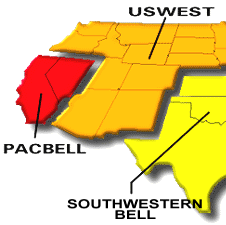
In exchange for being regulated, they were allowed a near monopoly in long distance and local telephone service. On January 1, 1984, the court forced AT&T to give up its 22 local Bell companies, establishing seven Regional Bell Operating Companies (RBOCs). A few local companies that were not wholly-owned subsidiaries of AT&T remained independent, but the RBOCs were very powerful and covered the US:
|
Since that time, mergers have reduced the number of RBOCs to four: Verizon (originally Bell Atlantic and Nynex), Qwest (Qwest Communications International took over US West), BellSouth and SBC (originally Southwestern Bell and Pacific Telesys). They compete for local business with Competitive Local Area Carriers or CLECs. The RBOCs are required to give CLECs access to their networks at low, regulated prices.
RBOCs were originally allowed to offer services only within specific regional areas. Under the terms of the Telecommunications Act of 1996, they are allowed to move into long distance and compete with interexchange (long distance) carriers like AT&T, Worldcom, and Sprint if they prove to state and federal agencies that they have opened their local markets to competition.
Like the US, most nations have moved toward deregulation and opening of competition in telecommunication during the last twenty years.
An interesting footnote is that Qwest was founded by Philip Anschutz who built the Staples Center and is building the Sport Complex on our campus. For some background on how he did it, see Is Qwest playing accounting games?
